
Do Walk-In Showers Increase Home Resale Value? A Good Bathroom Investment, Tub ROI & More
If you’re a homeowner wondering if a walk-in shower can boost value and resale potential, you’re not alone. Today’s buyers care about a bathroom that feels updated, safe, and easy to use—but the “right” choice depends on your layout, your bath needs, and whether you keep a tub or bathtub somewhere in the home. This guide breaks down what typically helps resale value, what can hurt it, and how to think about ROI and return on investment before you remodel.
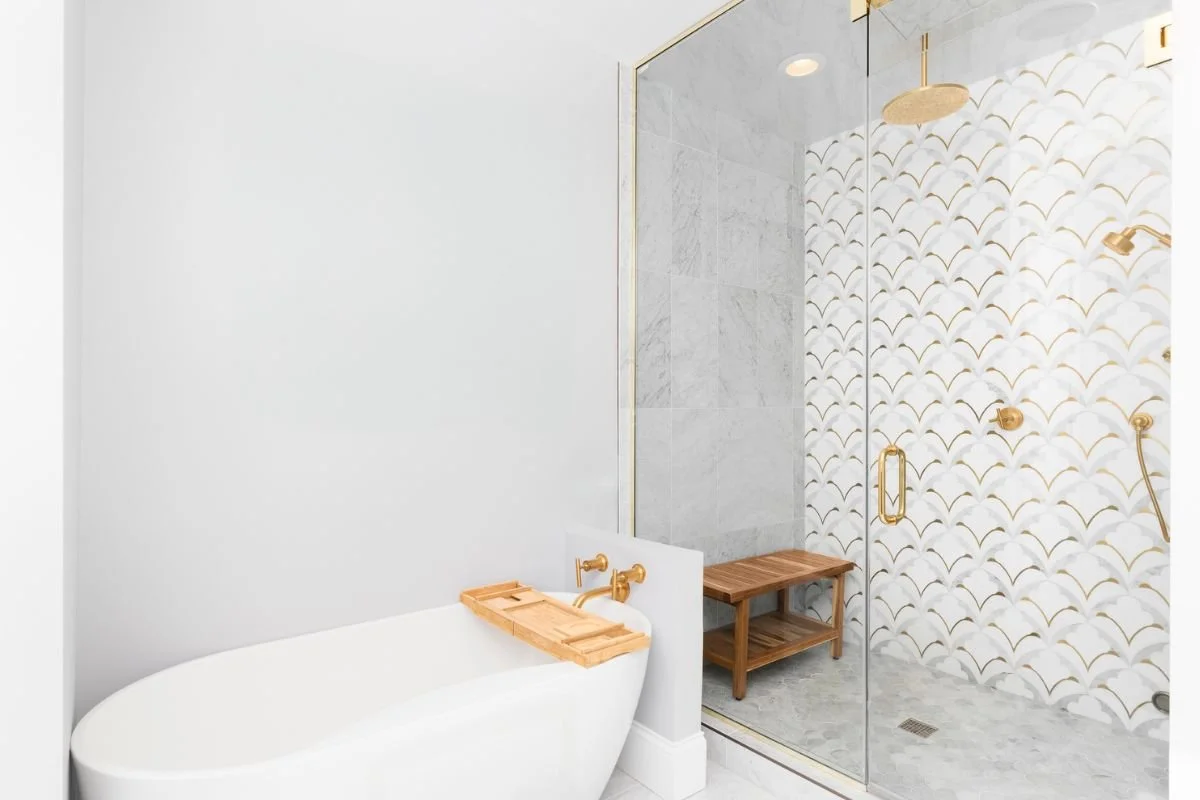
Walk-in shower and a bathtub in one bathroom—this combo can boost accessibility and aesthetic appeal while protecting resale value for a wider range of potential buyers.
Do walk-in showers increase home value and resale value?
In many markets, a modern walk-in shower can increase perceived value because it makes a bathroom feel updated and move-in ready. In a competitive real estate market, buyers often favor clean lines, easy maintenance, and a fresh look over older setups, especially when the space feels bright and spacious.
That said, the resale value impact depends on the value of a home in your area, the type of buyer, and what else the house offers. A well-executed walk-in shower can improve property value in the right context, but it’s not automatically a universal win in every bath layout.
What makes a bathroom remodel a good investment for resale?
A bathroom remodel tends to be a good investment when it solves common buyer objections: dated finishes, awkward layouts, or maintenance concerns. Strategic remodeling—not overbuilding—often produces better value and appeal than luxury upgrades that don’t match neighborhood comps.
Think of this like a simple value report: the best home improvement updates are the ones buyers notice immediately and understand. A clean, functional bathroom renovation with durable materials and a cohesive look can lift your home’s value without requiring an extreme renovation budget.
Choosing between a walk-in shower and a bathtub or shower: what do buyers want?
When choosing between a walk-in shower, a tub, or a bathtub or shower setup, it helps to think about likely buyer groups. Some potential buyers—especially families with young kids—often prefer a bathtub somewhere in the home. Others prioritize a spacious walk-in shower for daily convenience.
A common rule: don’t remove the only tub in a home aimed at broad buyers. Many agents recommend keeping least one tub across the property, because some homebuyer profiles consider it a must-have for flexibility in the bath routine and future resale.
Walk-in shower and a bathtub: does keeping both help resale?
If you have the available space, combining a walk-in shower and a bathtub can be a strong compromise. It supports flexibility for different lifestyles while still letting the bathroom feel updated. In many cases, keeping both can protect resale while giving you the modern feel buyers expect.
If you have one bathroom, the decision matters more. You may want at least one bathtub to preserve broader appeal, especially if comparable homes nearby still have one. In a larger home with multiple bathroom spaces, converting one to a walk-in shower while retaining a bathtub elsewhere is often the safer resale play.
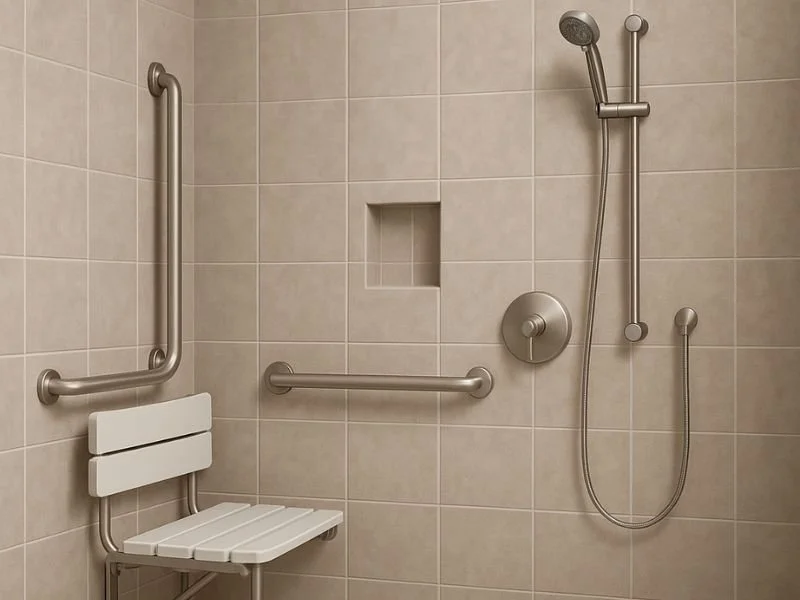
An accessibility-focused walk-in shower with grab bars, a built-in seat, and a low-threshold entry—smart upgrades that can support aging in place and broaden buyer appeal.
Accessibility and aging in place: why walk-in showers provide long-term value
Accessibility is a big driver of modern remodel decisions. A well-designed walk-in shower can reduce slips and falls, especially for older adults, and it’s helpful for homeowners with mobility issues. Even if you’re not thinking about it today, “aging in place” planning can add long-term value by making the home livable for more people.
Walk-in showers include: low-threshold entry, non-slip floor surfaces, and simple controls. Add grab bars (installed correctly into blocking), and you improve safety without making the bathroom look clinical. For many buyers, that blend of safety plus style increases appeal and functionality.
Aesthetic appeal and modern design trends: how design choices affect value
Aesthetic appeal can be the difference between “nice update” and “wow.” Unlike traditional shower/tub combos with heavy curtains, a modern design with clean tile lines and a frameless glass enclosure tends to photograph better and signal quality—two things that matter in listings.
Focus on design choices that support value and appeal: consistent finishes, coordinated lighting, and a tidy layout. A simple shower enclosure with minimal metal, plus durable materials, can create a sense of luxury and even a spa-like experience without overspending on trendy elements that date quickly.
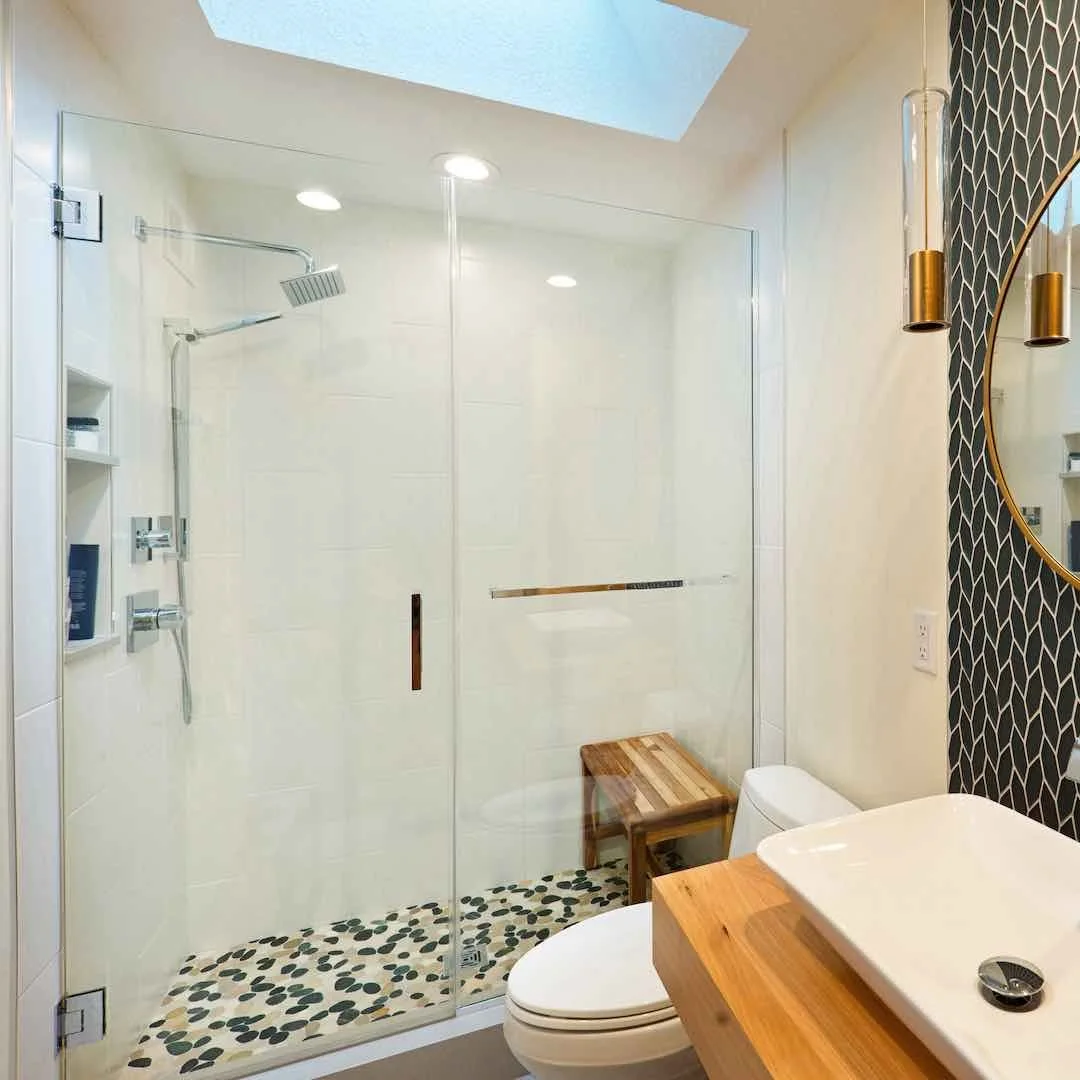
A bright walk-in shower with a frameless enclosure, slip-resistant floor, and modern fixture—style-forward choices that can improve bathroom appeal and support resale value.
Shower installation: what impacts installation costs and timelines?
Shower installation costs vary based on demolition, waterproofing, and whether you need plumbing adjustments. The more you move drain lines and supply lines, the more labor increases. That’s why installing a walk-in in the same footprint as an old tub is often more cost-effective than relocating everything.
When installing a walk-in shower, plan for proper waterproofing and slope—those details protect the home and prevent future repairs. Get a clear scope from a remodeling company, and compare cost vs. benefit: a straightforward upgrade that looks clean and performs well can outperform a complicated remodel that blows the budget.
Shower options: enclosure, floor, fixture, and safety upgrades that matter
The best shower options balance durability, maintenance, and style. A slip-resistant floor, a quality fixture, and a thoughtfully sized niche can elevate the shower experience. Small upgrades can also signal quality to buyers looking for move-in-ready homes.
If you’re adding a walk-in, choose details that feel intentional: an enclosure that fits the space, hardware that matches other bathroom elements, and lighting that avoids shadows. If you’re remodeling, align choices with the functionality of your bathroom—storage, ventilation, and easy cleaning often matter as much as tile style.
ROI question: is a walk-in shower worth the investment for your home?
So, is a walk-in shower worth the investment? Often, yes—when it modernizes the bathroom, fits buyer expectations for the area, and doesn’t eliminate key features. The return on investment is strongest when you avoid over-customization and keep the home aligned with local comps.
Your ROI also depends on the starting point. Replacing a dated tub/shower combo with a bright walk-in shower can feel like a major upgrade, especially if the rest of the bathroom is updated to match. In many cases, it’s a wise investment when it improves both daily use and resale positioning.
How to make your home more marketable and sell your home faster
If your goal is to sell your home faster, prioritize choices that make the home more marketable to the widest audience. That means clean, neutral finishes, dependable waterproofing, and a layout that makes sense. A strong walk-in shower can help, but only if it doesn’t create a downside (like removing the only bathtub in a family-heavy market).
To protect sale price, think about the full picture: one bath vs. multiple bathrooms, local buyer preferences, and the condition of the rest of the home. Walk-in showers have become a common expectation in updated homes, and when executed well, they can support home value without feeling like a risky leap.
Key takeaways
A modern walk-in shower can increase perceived value, especially in an updated bathroom.
The safest resale move is usually to keep at least one bathtub in the home.
Accessibility features (like grab bars and slip-resistant floor options) can add value to your home and broaden potential buyer appeal.
Aesthetic appeal matters: clean lines, a frameless enclosure, and cohesive finishes help the space feel premium.
Installation costs rise fast when you relocate plumbing; simpler layouts often deliver better return on investment.
The best ROI comes from practical upgrades that match neighborhood expectations and make the home feel move-in ready.