
Luxury Walk-In Shower Ideas That Feel Spa-Like, Luxurious, & Modern
If you’re hunting for luxury walk-in shower ideas, you’re probably trying to balance two things: a beautiful upgrade and a practical, everyday shower that’s easy to live with. This guide breaks down the smartest design choices—layout, tile, lighting, and features—so you can confidently plan a walk-in shower that looks premium, functions better, and fits your budget before you request a free quote.
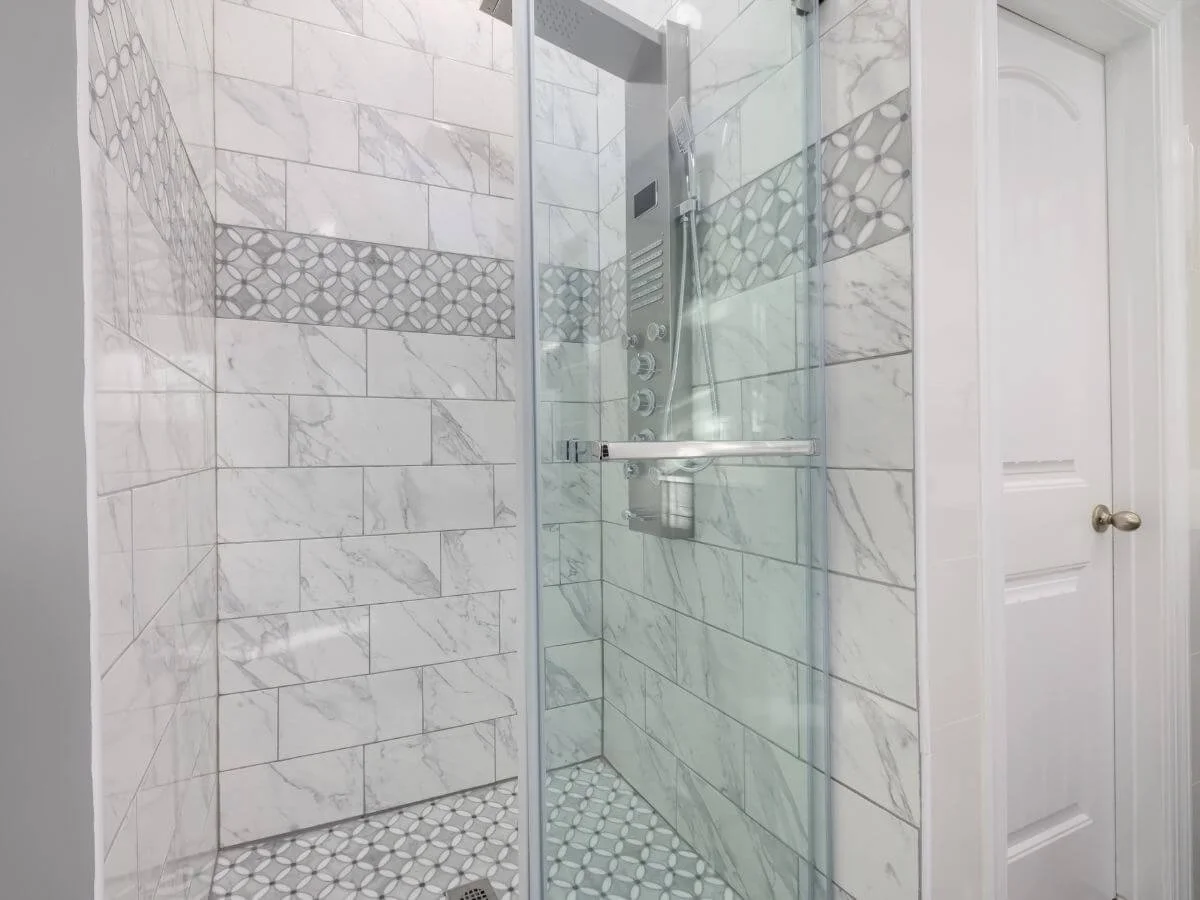
This luxury walk-in shower idea pairs patterned accent tile with frameless glass for a polished, custom look.
Outline (what we’ll cover):
Bathroom design choices that instantly elevate the look
Tile surfaces (including marble slabs) and what they change
Doorless vs. glass options and what feels more spacious
Showerheads, rain setups, and picking a system
Niches, storage, and seating that’s actually useful
Floors, drainage, and keeping the area safe
Skylight + lighting ideas for a serene feel
Tub or shower decisions (and keeping a bathtub)
Fixtures, finishes, and brand notes
Remodel timeline and what to expect
Bathroom remodel planning: what makes a luxury shower feel high-end?
A great bathroom remodel starts with the “big picture” decisions that set the tone: layout, proportions, and finishes. One simple idea that makes everything look more expensive is choosing fewer materials—but using them in a more intentional way. When the bathroom design feels cohesive, the shower becomes the centerpiece instead of a separate box in the corner.
Think about how you want the space to feel when you walk in. Do you want a calm, minimal look, or something bold and statement-making? A high-end walk-in shower often relies on clean lines, consistent hardware, and a layout that avoids visual clutter—especially around the entry, glass edges, and corners.
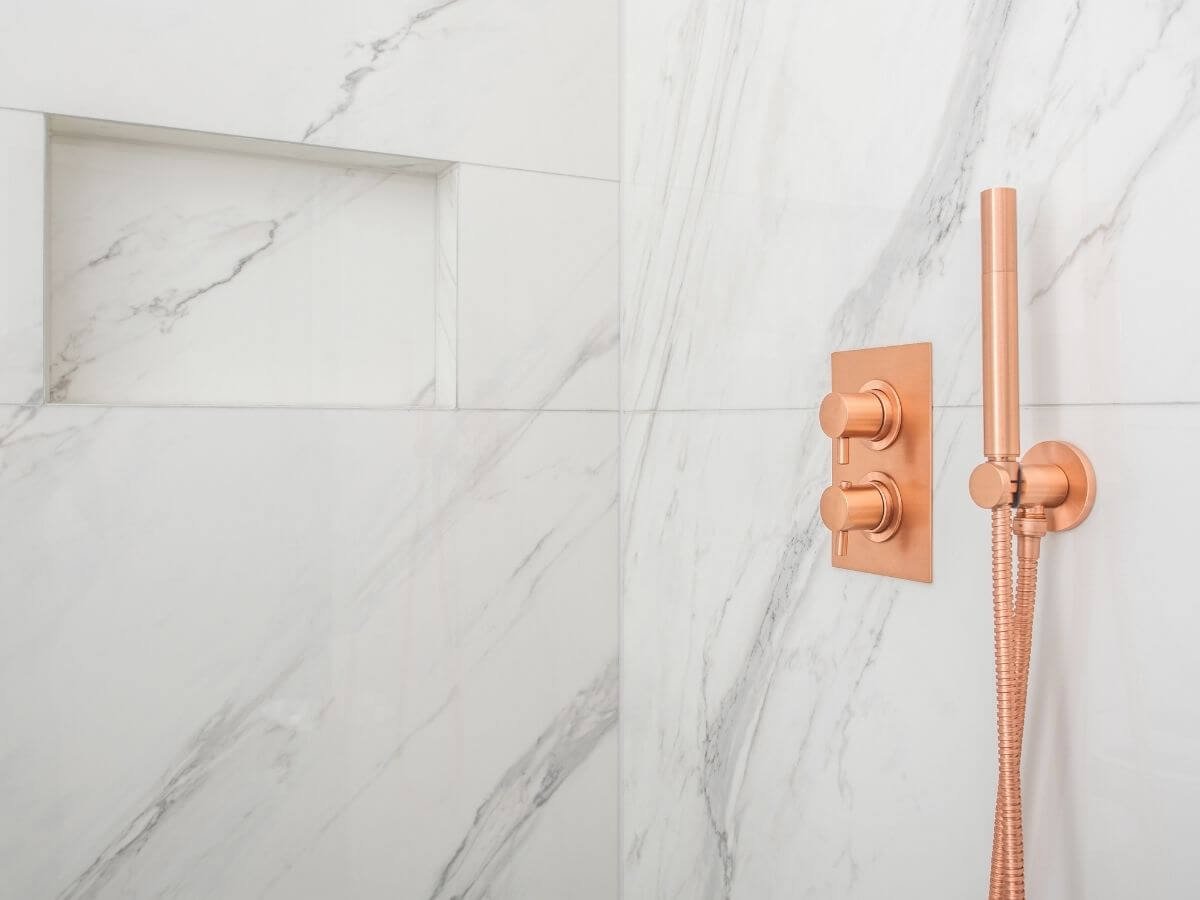
This walk-in shower idea proves it: simple tile lines + one bold fixture choice = upscale without clutter.
Tile walk-in shower surfaces: marble slabs, grout, and natural stone—what’s worth it?
Surface choices are where “nice” turns into “wow.” Using tile strategically can make a standard walk-in install look custom. If you love a dramatic, upscale look, marble slabs create a striking, continuous surface with fewer breaks. They’re a premium option, but they can deliver that boutique-hotel vibe fast.
If you prefer natural stone, plan for maintenance and sealing as part of the long-term ownership. For many homeowners, large-format tile is the best middle ground: it’s easier to clean, looks modern, and keeps lines simple. Just remember that the smaller the pieces, the more grout you’ll have—meaning more cleaning and more visual texture.
Pro tip: a tile walk-in style can look elevated by matching the wall and floor tones, then letting lighting and hardware carry the contrast.
Doorless shower or frameless glass shower: which is better for your space?
A doorless shower can feel airy and open, but it needs the right layout to control splash and drafts. If you’re working with a small bathroom, a partial wall or a longer entry path can help keep water where it belongs without making the room feel tight.

This modern walk-in shower idea uses frameless glass and clean subway tile for a crisp, spacious look.
On the other hand, a frameless glass shower keeps the space visually open while improving water control. The clean edges look premium, and it’s a popular choice when you want a more controlled shower experience without heavy framing. If you’re deciding what’s better for your home, think about who uses the shower most often, how warm you want it to feel, and how much cleaning you’re willing to do.
One layout note: a doorless walk-in shower can be stunning, but it typically works best when the entry is offset and the spray path is aimed away from the opening.
Showerheads and rain shower setups: how to choose a shower system
Upgrading the water delivery is one of the fastest ways to make a daily shower feel luxurious. Many homeowners start with a rain shower for that overhead, resort-style feel, then add a handheld option for flexibility. If you want that immersive effect, look for a setup that supports true rainfall coverage (not just a larger head with weak pressure).
When you shop, pay attention to the difference between a single showerhead and a multi-function package with multiple showerheads. A quality shower system can combine overhead, handheld, and body sprays in a clean layout—without turning the wall into a confusing control panel. Also, consider where your shower head will sit relative to height and spray direction so you don’t end up aiming water out of the opening.
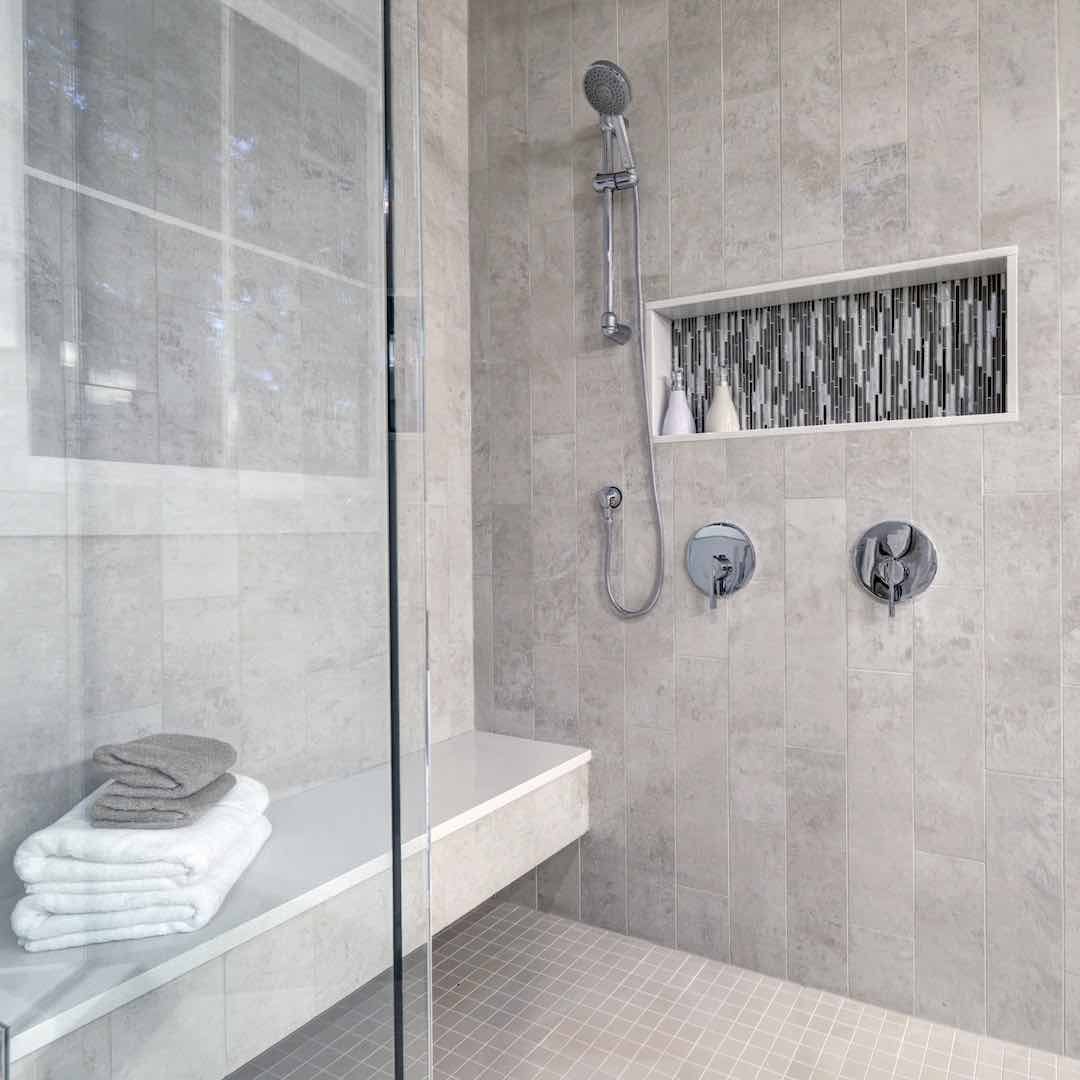
For a more modern design, add a shower niche for bottles and a bench for comfort and accessibility.
Shower niche, built-in storage, and a built-in shower bench
Storage and comfort are where “pretty” becomes truly livable. A well-placed shower niche keeps bottles off the floor and makes cleaning easier. If you want a clean look, align the niche with your tile lines and keep it sized for what you actually use (not what you might buy later).
For comfort, adding seating changes the way the space works—especially for shaving, relaxing, or accessibility. A built-in shower bench can blend into the wall layout and still feel upscale if the materials match. Even a simple shower bench detail can elevate the room when it’s integrated cleanly and doesn’t interrupt the layout.
If you’re going for a sleek, minimalist vibe, hide as much as you can: recessed storage, simple controls, and fewer countertop items.
Floor tiles and the drain: creating a safe shower area
The floor is where safety, maintenance, and style collide. Choosing the right floor tiles helps prevent slips while still looking polished. In a walk-in shower, you’ll often want a bit more texture underfoot compared to the walls—especially if the space will be used by kids, seniors, or anyone with balance concerns.
Good drainage is non-negotiable. Your installer should plan slope carefully toward the drain, and the floor surface should support that slope without awkward lippage. This is also where great tile work matters: when it’s done well, everything feels intentional and seamless—even in tighter footprints.
The goal is a clean, comfortable shower area that performs well day after day, not just something that photographs nicely.
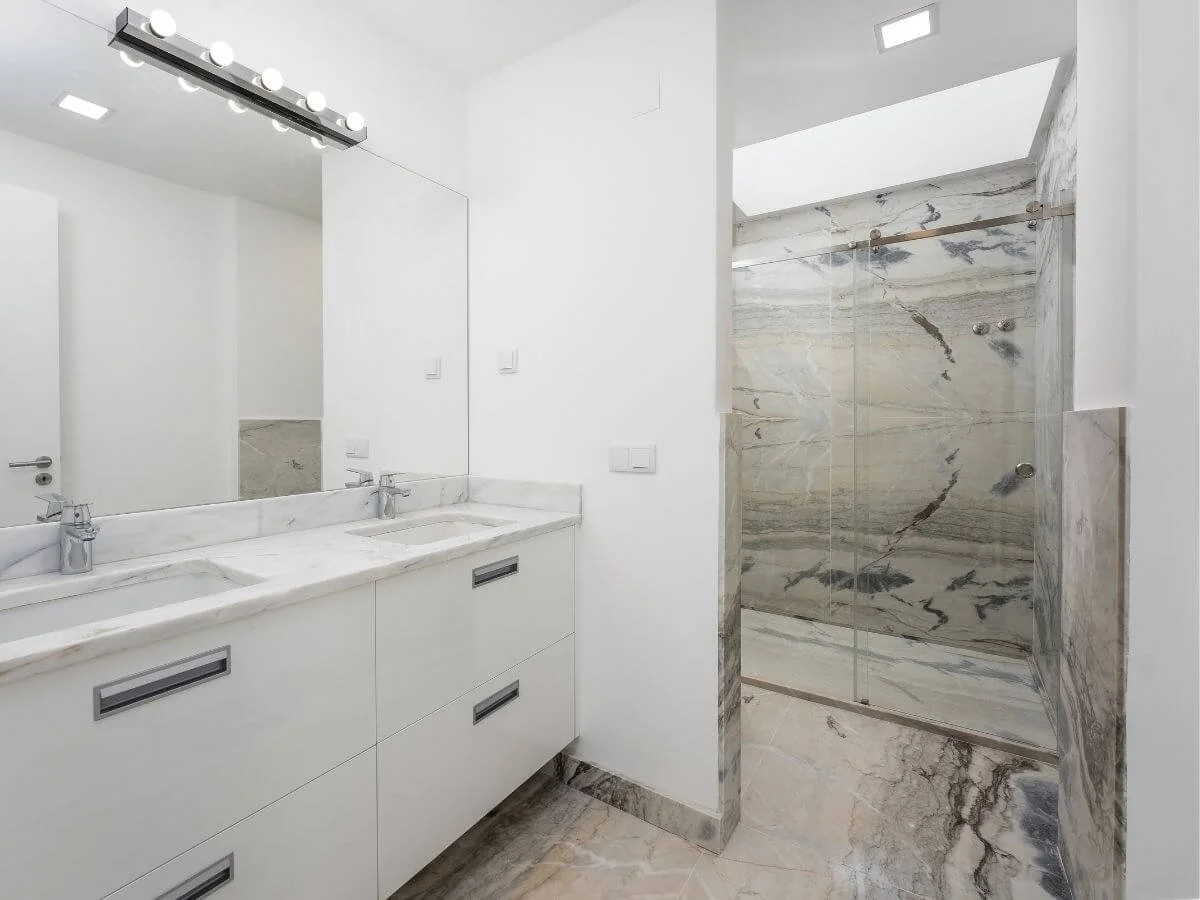
A skylight over the walk-in shower brings in natural light and makes the bathroom feel instantly more spa-like.
Skylight and lighting ideas for a serene modern bathroom
Lighting is a powerful design tool—maybe the most underrated one in a remodel. A skylight can flood the room with natural light and make finishes look richer (especially stone and glass). If you have the option, it’s one of the best ways to make the space feel open and calm.
Layer your lighting for function and mood: overhead ambient, task lighting at the vanity, and optional accent lighting near the shower wall or niche. Done right, the whole bathroom feels more serene, and you get that “fresh and bright” feeling even on dark mornings. This is a key ingredient in a truly modern bathroom that feels relaxing instead of clinical.
Tub or shower: should you keep a bathtub or add a soaking tub?
The tub or shower decision is personal—and it’s often about resale and lifestyle. If you already have another bathtub in the home, you may feel comfortable going all-in on the walk-in shower. But if this is the only bathing option, keeping a tub can still be smart for families or future buyers.
Some remodels combine both: a separate soaking tub plus a walk-in shower area that feels spa-inspired. If space is limited, a high-quality tub paired with a premium shower setup can still look upscale without forcing you into a larger footprint.
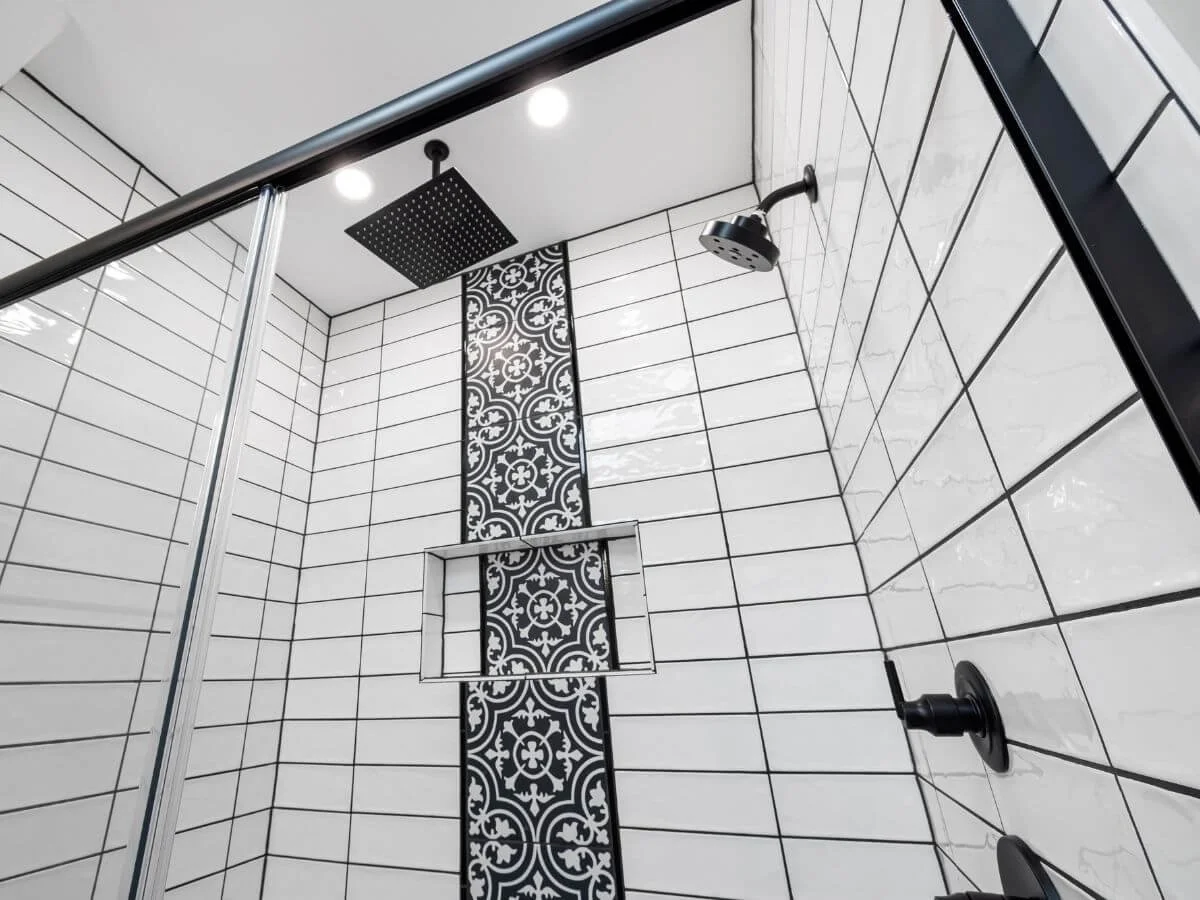
A simple upgrade that elevates the whole bathroom: contrast tile + modern fixtures + rainfall-style showerhead.
Custom walk-in shower design details: fixtures, matte black, and kohler options
The finishing touches make the design feel intentional. Hardware consistency is huge—choose one finish across controls, handles, and accessories. Matte black can look striking and modern, but it shows water spots more than some finishes, so plan cleaning accordingly.
Pick quality where it matters: valves, handles, and core components. One brand you’ll see often in higher-end remodels is kohler, but the best choice is the one that matches your layout and budget while using reliable internals. Your fixture choices should also match your water pressure and household needs so the shower performs the way you expect.
This is also where a custom shower feel comes from—small decisions that line up across the whole space, like matching trim shapes and keeping control placement intuitive.
Walk-in shower remodel timeline: from shower remodel to bathroom renovation
A walk-in shower remodel can move quickly once materials and scope are locked. The most common delays come from changes after demo—especially if you discover older plumbing, framing issues, or uneven surfaces that need a leveling slab or reinforcement.
A typical shower remodel includes demo, plumbing, waterproofing, surface installation, and finishing. If it’s a full bathroom renovation, you’ll add flooring, vanity, lighting, paint, and potentially ventilation upgrades. Plan decisions early so your contractor can order materials and schedule trades without pauses.
If you want the best walk-in shower result, aim for clarity before the first tile goes up: confirm layout, surfaces, glass strategy, and hardware placement so the entire plan feels cohesive and truly timeless design.
Key takeaways to remember
Start with layout and cohesion—great interior design choices make the bathroom feel upgraded instantly.
Big surfaces (like large-format tile or statement stone) reduce visual noise and boost the premium feel.
A glass shower with frameless glass edges often balances openness and water control.
Choose features that improve daily life: storage, seating, lighting, and reliable controls.
Plan the floor for comfort and performance—texture, slope, and water control matter.
Decide early whether you’re keeping a tub, replacing it, or creating a two-zone layout.
If you’re ready to transform your bathroom, the fastest next step is getting a free quote from a qualified installer—so your style goals and budget match from day one.